
Types of Kitchen Cabinets [Guide]
When it comes to the heart of the home, the kitchen, cabinetry plays a pivotal role. Kitchen cabinets are essential for storage, help define the look of your kitchen and are a key consideration in any kitchen renovation. This types of kitchen cabinets guide from Nicholas Building Solutions will help you understand the basic cabinet types and door styles, giving you valuable insights for your next custom kitchen cabinets project or flatpack kitchen cabinets upgrade.
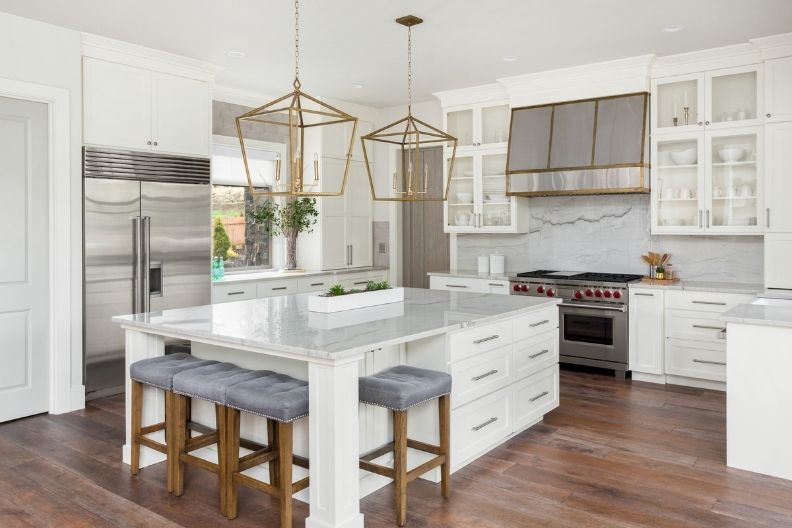
Table of Contents
Basic Types of Kitchen Cabinets
1. Base Cabinets
The workhorse of kitchen cabinetry, base cabinets, are installed on the floor and support your countertops. They provide considerable storage space, perfect for pots, pans, and small kitchen appliances. They typically measure 24 inches deep and 36 inches tall. Base cabinets may include drawers, doors, or a combination of both.
2. Wall Cabinets
Also known as upper cabinets, wall cabinets hang from the wall, usually above the countertops. They’re perfect for storing items you frequently use, like dishes and glasses. Wall cabinets often reach the ceiling in modern kitchen designs, maximizing storage space. However, they typically stand about 12-18 inches deep, less than base cabinets.
3. Tall cabinets
Also known as pantry cabinets, tall cabinets extend from floor to ceiling, providing ample storage for food, small appliances and cleaning supplies. They usually stand beside refrigerators or at the end of cabinet runs to create a sense of height and frame the space.
Typical heights range from 2100 to 2400 mm. Tall cabinets are ideal when many homeowners need extra storage for bulk groceries, brooms, vacuum cleaners and just storage that keeps clutter away from benchtops.
4. Kitchen island cabinets
A kitchen island often serves as the focal point in contemporary kitchens. Island cabinets offer additional storage space and can house a second sink, wine fridge or cooktop, depending on your appliances and storage needs.
The cabinets and drawers beneath can be designed in any style to complement the overall kitchen cabinetry, from classic shaker style to sleek flat panel doors with statement handles. A well planned island can create the perfect balance between preparation space, seating and storage in your new kitchen.
Cabinet Door Styles
Choosing the right cabinet doors is crucial, as they are the most visible design element of your kitchen cabinetry. Door styles can transform the same cabinet frame into something suited to traditional kitchens, modern kitchens or anything in between. Here are two of the most popular styles:
1. Flat panel
Flat panel doors are a perfect fit for a modern kitchen design. They offer clean lines and a simple, minimal look with a flat centre panel and square edges. These doors work well with materials like laminate, painted finishes or even veneer on solid wood or medium density fiberboard cores.
Flat panel cabinet doors are popular styles in contemporary kitchens because they are easy to keep clean, work with a wide range of hardware and blend with other elements like open shelving and feature cabinets.
2. Raised panel
More commonly seen in traditional kitchens, raised panel doors feature a centre panel that sits higher than the surrounding frame. This added detail creates depth and character in your kitchen cabinet designs.
Raised panel doors pair well with solid wood and more classic kitchen styles, and they can be finished in paint or stain to highlight the profile. When matched with the right kitchen styles and other elements such as benchtops, splashbacks and hardware, they can make all the difference to the overall look.
A 2025 Note on Benchtops
If you are choosing base cabinets, your benchtop decision has changed. Since 1 July 2024, engineered stone benchtops, panels and slabs have been banned nationally in Australia to protect workers from silica dust, with an import ban following on 1 January 2025. Natural stone such as granite and marble is not affected, and popular alternatives now include porcelain and sintered stone, natural stone and high-pressure laminate. It is worth confirming your benchtop choice early, as it affects the base cabinet layout beneath it.
Custom, Semi-Custom, and Stock Cabinets
When choosing kitchen cabinets, you will also come across three main categories based on the level of customisation. Each has its own balance of cost effective options, flexibility and long term value.
1. Stock cabinets
Stock cabinets are pre manufactured in standard sizes and popular styles. They offer less flexibility in terms of cabinet types and finishes, but they are more budget friendly and quick to install, which appeals to many homeowners planning a simple kitchen renovation.
Flatpack cabinets are a common form of stock cabinets. These flatpack kitchen cabinets arrive ready to assemble and can be a cost effective way to create new cabinetry when you choose quality materials and hardware.
2. Semi custom cabinets
Semi custom cabinets offer more flexibility with dimensions and design style. You can adjust depth and width within certain limits, choose from a broader range of door styles, colours and finishes, and sometimes add extra features such as pull out shelves for easy access.
Semi custom options sit between stock cabinets and fully custom cabinetry. They make it easier to find the right kitchen cabinets for tricky spaces or when you want a more tailored look without the price of full custom cabinetry.
3. Custom cabinets
Custom cabinets are built to your exact specifications, offering almost endless possibilities in terms of materials, finishes, door styles and configurations. You can mix shaker cabinets with flat panel feature cabinets, design unique pantry cabinets, integrate appliances seamlessly and ensure every wall and corner of your kitchen space is used well.
Custom cabinetry is the most expensive option, but it delivers a unique dream kitchen that reflects your style, storage needs and the way you cook and live. With the right kitchen cabinet designs and quality materials, custom work provides excellent long term value.
If you’re weighing up cabinetry choices alongside your floor plan, our guide to the most functional modern kitchen layouts is a helpful next step.
Conclusion
Your choice of kitchen cabinets can make or break your kitchen’s functionality and aesthetic appeal. Whether you prefer solid wood cabinets or painted finishes, shaker style doors or flat panel fronts, traditional kitchens or contemporary designs, the right kitchen cabinet mix will support your storage needs and the way you use the space every day.
Remember to think about cabinet types, cabinet doors, hardware and other elements such as benchtops and appliances as part of the same picture. When you choose the right kitchen cabinets for your layout and lifestyle, you create a new cabinetry scheme that looks great, offers easy storage and works for years to come.
At Nicholas Building Solutions, we are experts in all types of kitchen renovations, from simple flatpack cabinet upgrades to fully custom kitchen cabinets for your entire kitchen. We can guide you through this ultimate guide to cabinet choices in a practical way, helping you select the right cabinets, materials and styles for your project.
Contact us today on 0419 606 288 to discuss your kitchen design and get started on your dream kitchen.
Frequently Asked Questions
What Is the Standard Size of Kitchen Cabinets in Australia?
In Australia, base cabinets are typically around 720mm high, which brings the finished bench height to roughly 900mm once the kickboard and benchtop are added. Base cabinet depth is usually around 560mm to 580mm, sitting under a benchtop of about 600mm deep. Wall cabinets are commonly 300mm to 350mm deep, while tall pantry cabinets range from about 2100mm to 2400mm high. Custom cabinetry can be adjusted to suit your height, layout and appliances.
What Is the Best Material for Kitchen Cabinets?
Most Australian kitchens use high moisture resistant (HMR) particleboard or MDF for cabinet carcasses, as these materials are stable, cost effective and suited to the humidity of a kitchen. Plywood is a stronger option that holds screws well and resists moisture, but it costs more. Solid timber is usually reserved for doors or feature elements. Whatever you choose, sealed edges and quality hinges and drawer runners make the biggest difference to how long your cabinets last.
What Is the Difference Between Laminate and Two-Pac Cabinets?
Laminate cabinets have a durable surface bonded to the board, making them scratch resistant, easy to clean and budget friendly, with a wide range of colours and woodgrain looks. Two-pac is a sprayed polyurethane paint finish that gives a smooth, seamless look in matt, satin or gloss, and suits handleless and custom designs. Two-pac costs more and can chip on impact, but it can be repaired and resprayed. Laminate is often the more practical choice for busy family kitchens.
Can You Replace Kitchen Cabinet Doors Without Replacing the Cabinets?
Yes, if the existing cabinet carcasses are in good condition, replacing the doors, drawer fronts, handles and benchtop can give your kitchen a fresh look at a lower cost than a full renovation. This works best when you are happy with the current layout and the cabinets are structurally sound with no water damage or swelling. If the carcasses are sagging, damaged or poorly laid out, a full cabinet replacement is usually the better long term investment.
How Long Do Kitchen Cabinets Last?
Well made kitchen cabinets can last 15 to 20 years or more with proper care, while cheaper cabinets may show wear much sooner. Lifespan depends on the quality of the board, edging, hinges and drawer runners, as well as how well the cabinets are protected from moisture around the sink and dishwasher. Wiping up spills quickly, using the rangehood when cooking and adjusting hinges as needed all help your cabinetry stay in good condition for longer.